After the US-Iran MoU: Diplomacy’s unfinished business
AI Summary
Following a brief truce via a US-Iran MoU, hostilities have resumed with US precision strikes on Iranian military and petrochemical sites and Iranian missile attacks on US facilities in the Gulf. Commercial shipping is disrupted in the Strait of Hormuz as control over maritime navigation remains contested.
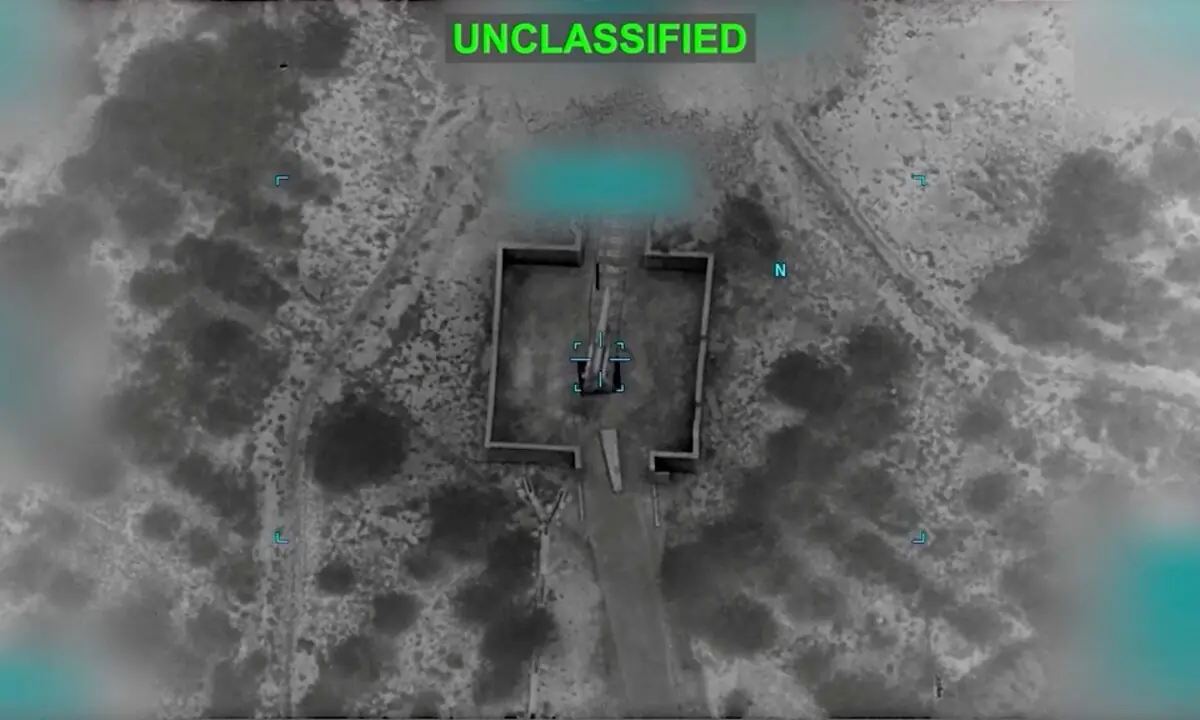
Barely four weeks after the signing of the US-Iran memorandum of understanding (MoU) that brought an uneasy halt to one of the most dangerous confrontations between the two rivals in decades, missiles are once again crossing the Gulf, commercial shipping is retreating from the Strait of Hormuz and oil prices are again inching upwards. Over the past 24 hours, the confrontation has entered its most dangerous phase since hostilities resumed last week, with both sides sharply intensifying military operations. Overnight, the US carried out a fresh wave of precision strikes against military and petrochemical infrastructure across southern Iran, targeting facilities in the oil-producing Khuzestan province as well as sites around Bandar Abbas, Qeshm Island and Bushehr. It employed aircraft, naval assets and — for the first time in the campaign — sea drones to degrade Iran’s air defence, missile and coastal capabilities. Open-source imagery has corroborated damage to the Omidiyeh airbase and to a building within the Bushehr nuclear complex. A projectile falls at an unknown location, during what US Central Command says are strikes on Iranian military targets, in this screengrab taken from a handout video released on July 11, 2026. — Reuters Iran responded with ballistic missile strikes against facilities linked to US military presence in Bahrain, Kuwait and Jordan, while simultaneously maintaining pressure in the Strait of Hormuz through anti-ship missile activity and continued interference with commercial shipping. These exchanges have further reduced vessel traffic through the waterway to single digits, reinforcing a pattern that has become increasingly evident over recent days, whereby Washington has relied on long-range precision strikes against Iranian military infrastructure while Tehran has sought to exploit geography and asymmetric maritime capabilities to impose costs and disrupt navigation. Who will control the Strait of Hormuz? These developments are unsurprising because the MoU was never intended to resolve the dispute that resulted in the conflict; instead, it merely suspended fighting long enough for negotiations on the more difficult political questions to begin. The latest escalation is, therefore, less a collapse of diplomacy than a reminder of diplomacy’s unfinished business. One of the issues left unresolved by the MoU, and which has now brought both sides back to the brink, is the question of who will ultimately determine the rules governing navigation through the Strait of Hormuz, the main maritime gateway for energy exports from the Gulf to international markets. The controversy has stemmed from the language of the fifth clause, under which Iran undertook, “using its best efforts”, to ensure the safe passage of commercial vessels for an initial 60-day period while also committing to restoring normal traffic after removing military and technical obstacles, including demining operations. More significantly, however, the clause stipulated that Iran would conduct dialogue with Oman “to define the future administration and maritime services in the Strait of Hormuz, in discussions with other Persian Gulf littoral states, in line with applicable international law and the sovereign rights of coastal states of the Strait of Hormuz”. Vessels are seen anchored in the Strait of Hormuz, off the port city of Khasab on Oman’s northern Musandam Peninsula on May 17, 2026. — AFP This carefully negotiated formulation has become the principal source of disagreement. Washington has interpreted the reference to international law as reaffirming the longstanding principle of freedom of navigation through an international waterway. In contrast, Tehran has placed greater emphasis on the reference to the sovereign rights of the coastal states, arguing that any future governance arrangement must recognise the authority and security concerns of the littoral countries, particularly Iran. The phrasing of the clause made the signing of the MoU possible, but it essentially postponed the dispute to a later date. Tehran believes that the military advantage it had gained during the conflict entitles it to establish stricter oversight of maritime movement through waters adjoining its coastline so that routes previously used, in its view, for facilitating hostile military operations could no longer function without greater scrutiny. Washington, by contrast, maintained that freedom of navigation through one of the world’s principal commercial arteries could never be surrendered to the preferences or security perceptions of any single state because accepting such a precedent would carry implications far beyond the Gulf. Those competing assumptions have now emerged as the principal fault line of the post-war order. It is, therefore, important that the renewed violence should not be viewed simply through the prism of another exchange of missiles because the military dimension just points to the contest over