Bangladesh's nuclear debut posts global test
AI Summary
Bangladesh is progressing on its first nuclear power plant at Rooppur, expected to provide 15% of electricity by 2028. The $12.65 billion project faces delays and rising costs amid geopolitical disruptions, underscoring nuclear power's role in reducing fossil fuel dependence and vulnerability for developing economies.
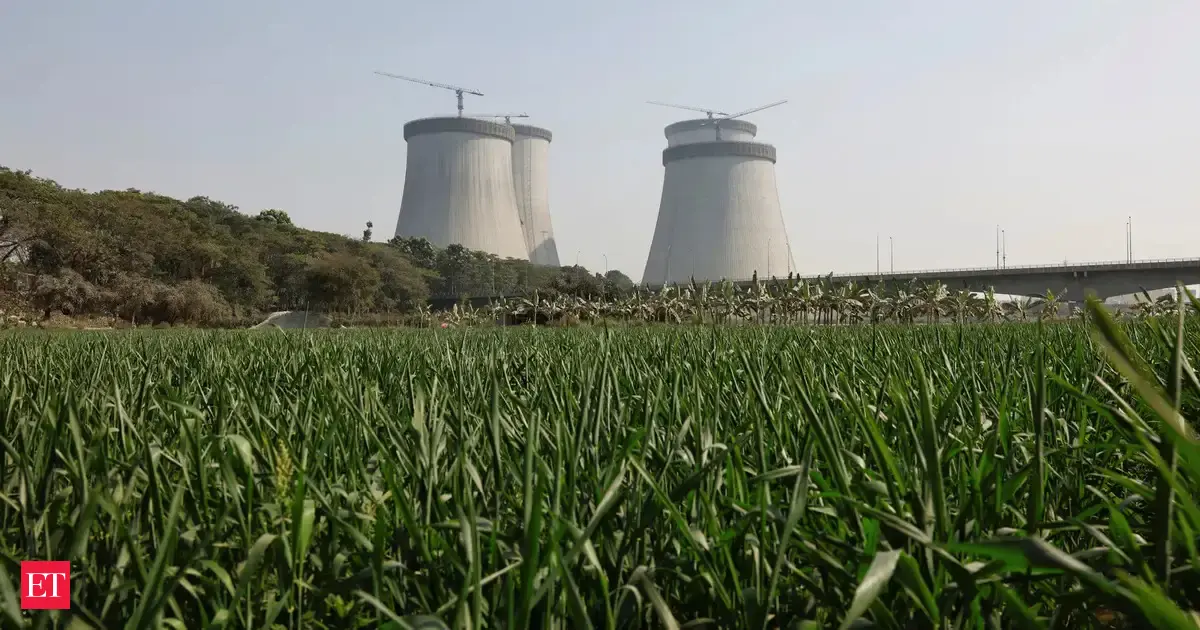
On the banks of the Padma river in western Bangladesh, local tourists are posing for selfies in front of the four massive, ivory-colored cooling towers at the country’s first nuclear power plant.Once fully completed in 2028, the two Russian-designed reactors at the Rooppur facility will be able to supply as much as 15% of the country’s electricity. The project is an audacious bet that nuclear power can meet the needs of an industrializing economy without breaking the bank, and other developing nations across the world will be watching closely.Atomic power has undergone a renaissance over the last few years. While safety risks and heavy cost overruns saw the world sour on nuclear, especially after the Fukushima disaster in Japan in 2011, those concerns are now being surpassed by the need to decarbonize and meet a surge in power demand from artificial intelligence and the electrification of transport fleets.For developing nations like Bangladesh, atomic energy is less about data centers and more to do with weaning their economies off fossil fuels and reducing their vulnerability to external shocks like the Iran war. With oil and gas exports from the Persian Gulf upended by the conflict, long lines at filling stations became routine, homes in the countryside had to cope with hours of daily blackouts, and factory output suffered.“The recent geopolitical conflicts — Iran and Russia-Ukraine — have shown that a scarcity of resources hurts poorer countries more than rich ones,” said R. Srikanth, who heads the energy, environment and climate change program at the National Institute of Advanced Studies in Bengaluru in India. “That strengthens the case for nuclear in emerging economies.”The 2.4 gigawatt project has been more than a decade in the making, a period marked by a series of upheavals including the Covid-19 pandemic, the Russian invasion of Ukraine and the Iran war. Those events are an endorsement of Bangladesh’s strategy of reducing its heavy reliance on imported fossil fuels, but they’ve also pushed Rooppur beyond its original timeline of commissioning the first unit by 2023.132340864The project has been inherited by Prime Minister Tarique Rahman, who came to power in elections in February, and chimes with his government’s efforts to revive growth after years of dictatorship came to an end in 2024. The first reactor is now expected to become fully operational by the start of 2027, with the second one to follow a year later, according to Md. Zahedul Hassan, managing director at Nuclear Power Plant Co. Bangladesh Ltd., the facility’s operator.Like other developing economies, though, Bangladesh has found that nuclear projects come with expanding costs. Under the main contract with Russian state-owned company Rosatom, the plant will cost around $12.65 billion, including the first few years’ fuel, according to the World Nuclear Association. But in local-currency terms, that cost has now increased by almost a quarter since the project was approved a decade ago, thanks to a sharp weakening of the Bangladeshi taka against the dollar.“The delay has had a massive financial implication for Bangladesh,” said Md. Shafiqul Islam, a professor of nuclear engineering at Dhaka University. “A timely completion would have not only avoided this massive cost escalation but would have also helped us trim our fossil fuel import bill.” Plant operator Hassan, while declining to give details on the estimated cost of generation, is adamant that it will be value for money for the country. “If you assess from the point of view of assurance of long-term supplies, safeguards against supply chain issues as well as the cost of generation, it’s very much competitive,” he said. Bangladesh is now exploring small modular reactors as a longer-term hedge against energy shocks and is in early talks with suppliers including Rolls-Royce Holdings Plc and Chinese manufacturers, according to Power and Energy Minister Iqbal Hassan Mahmood.“The government is looking at plants generating 300 to 400 megawatts, small enough to be built along riverbanks and deployed faster than conventional reactors,” he said. “We will not go for large-scale plants anymore because there are huge liabilities.”Even the most committed nations will have to deal with the high upfront capital outlay, long construction times, and the risk of delays that increase costs, until new technologies, such as SMRs, mature. The benefits of nuclear power is that it’s low-carbon, reliable and continuous, making it an ideal baseload electricity source to pair with intermittent renewables, like solar and wind, for the energy transition.“The Rooppur plant will ensure Bangladesh doesn’t need to build any new baseload capacity in the next five to seven years,” said Shafiqul Alam, the lead Bangladesh analyst at the Institute for Energy Economics and Financial Analysis. “That’s going to provide the opportunity to accelerate renewables installations and invest in grid modernization.” Growing confidenc