Capital blockade chokes Karachi Port operations
AI Summary
Fears that police will seize trucks and containers ahead of an opposition march in Islamabad have led transporters to halt northbound journeys, leaving cargo containers backed up at Karachi Port. The disruption is raising costs for carriers and affecting deliveries to multiple cities, amid political tensions over jailed former prime minister Imran Khan and his PTI party’s planned protest.
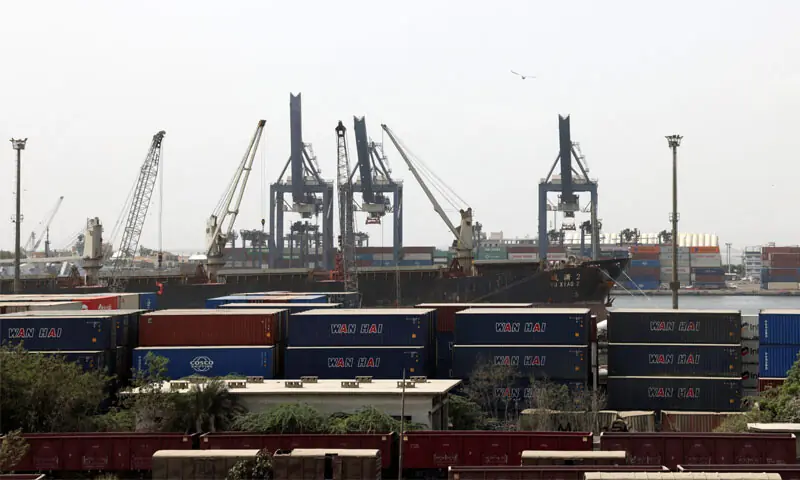
KARACHI: Pakistan’s effort to keep supporters of jailed former prime minister Imran Khan out of the capital has led to a pileup of shipping containers in the nation’s main port of Karachi, 1,400 kilometres away. Truckers are refusing to drive north, for fear their vehicles will be seized and the containers used to barricade Islamabad ahead of an Oct 4 march on the city planned by Imran’s Pakistan Tehreek-i-Insaf (PTI) opposition party. “Right now, going toward Punjab is like committing suicide,” said driver Javid ur Rehman, 35, who has halted such journeys, referring to Pakistan’s most populous province. “The police seize the vehicles and snatch the containers, and then we are left distressed.” Containers pile up as truckers halt northbound trips ahead of PTI march Steel shipping containers, packed with sand and welded together, have lined the roads into Islamabad for weeks, in preparation against a march, postponed from Sept 27, to demand Khan’s release from prison. The former prime minister was jailed in 2023 after being ousted by parliament. All convictions but one have been suspended or overturned, with appeals pending. His party remains under state scrutiny that has suppressed participation in recent protests, however, “This is not the way to stop protests,” said Rana Mohammad Aslam, president of the Karachi Goods Carrier Association. Authorities began stopping vehicles around Sept 5, weeks before the original march date, he said. Pakistan’s home, information, commerce and finance ministries did not respond to requests for comment. Punjab police and the provincial home department also did not respond. The containers are positioned ready for placement at key entry points into Islamabad, a capital region larger than the southeast Asian city state of Singapore. Transporters battling rising prices say they cannot afford to have trucks seized. Police requisitioned more than 2,000 vehicles in September ahead of the march, they added, many still loaded with cargo and held for days with little or no compensation. Their reluctance is leaving containers piling up at Pakistan’s main trade gateway, Karachi. The disruption was affecting routes to Islamabad, the military city of Rawalpindi, and the cities of Jhelum, Peshawar and Attock, Aslam said. Some operators had halted journeys beyond Gujranwala in Punjab, while others took alternative routes. Transporters mounting bills The bills are mounting for those whose containers have been seized, as daily demurrage charges on one such container alone can run into Rs30,000 to Rs40,000 ($110 to $150), Aslam said, adding to losses from missed deliveries and idle trucks. Consumer prices rose 10.26pc in September from a year earlier, while the transport price index climbed 27.43pc, the Pakistan Bureau of Statistics said on Thursday. Operators are struggling to pay drivers and maintain their fleets, as international shippers still expect payment regardless of the reason for the delay, Aslam said. He said he was holding talks to find a solution, but transporters could stage their own protest if complaints go unanswered. For Pervaiz Khan, 50, the risk was enough to keep a load of chemicals parked in Karachi. “Right now, my vehicle is loaded, but I am not going,” said the father of five, adding that he had loaded his cargo of chemicals by night. “We depart from Sindh, and the moment we enter Punjab, that’s when our troubles begin.” Drivers stranded near Islamabad regretted lost days of work or earnings. “If the roads open, our children’s livelihoods will open up,” said Sagheer Ahmed, 51, who added that his children, awaiting him at home, relied on his earnings. “If not, we will just keep standing.” Published in Dawn, October 3rd, 2026