Medication abortion: Decisions from federal courts, the FDA or Trump’s Department of Justice could try to end access via telehealth
AI Summary
Legal challenges in the US could restrict access to telehealth medication abortion services, specifically regarding the drug mifepristone. Federal courts and regulatory agencies are involved in ongoing litigation that might reinstate in-person dispensing requirements, impacting abortion access nationwide.
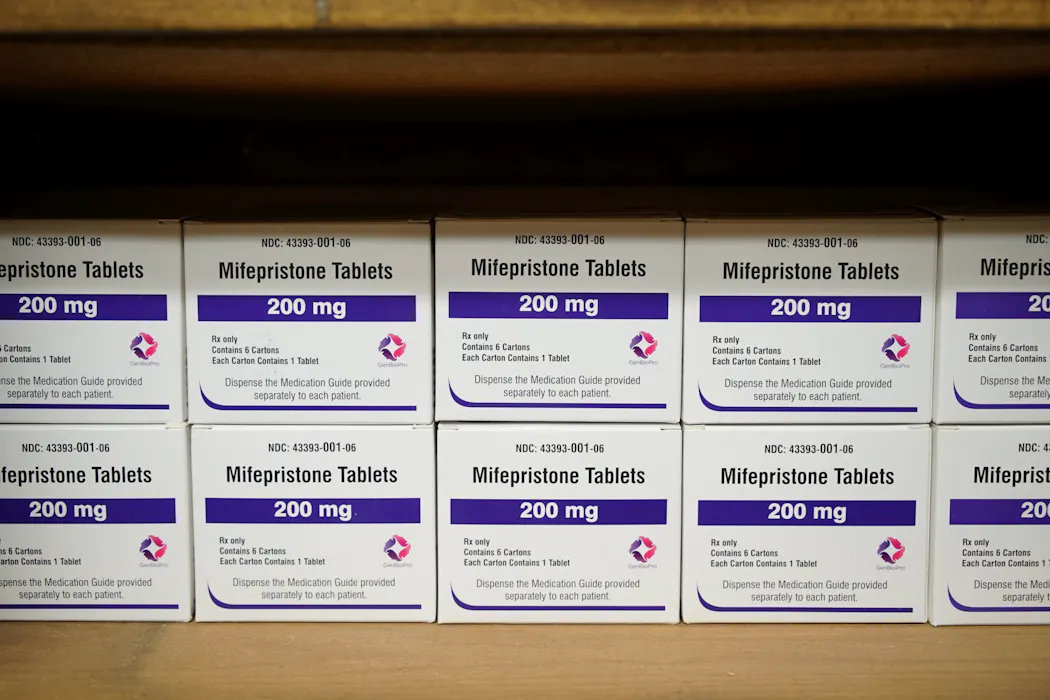
Boxes of the drug mifepristone line a shelf at a women's center in Alabama on March 16, 2022. AP Photo/Allen G. Breed Roughly two-thirds of Americans end their pregnancies by taking two abortion medications – misoprostol and mifepristone. Because these safe, effective medications can be prescribed via telehealth, without an in-office visit, they are how most patients terminate pregnancies in states that ban abortion. In recent years, anti-abortion groups and lawmakers have seeded a number of challenges to medication abortion. This year, several are coming to fruition. In 2026, decisions from either the courts, Food and Drug Administration or Department of Justice could end telehealth for medication abortion. I am a law professor who researches and writes on reproductive health and abortion law. Here’s the abortion news I’m monitoring for the rest of 2026: Louisiana lawsuit could upend abortion access nationwide The most imminent threat to mailed abortion pills is the court case Louisiana v. FDA. Louisiana sued the FDA in October 2025 over the agency’s 2023 decision to remove an in-person dispensing requirement for mifepristone. The state alleges that the rule change was unlawful, purportedly because the FDA failed to weigh the dangers of the drug. Louisiana, which has a near-total abortion ban, claims that it has suffered direct economic harm and threats to its state sovereignty when providers in protective states legally prescribe abortion pills to pregnant Louisianans across state lines. This case has moved quickly. In April 2026, at the FDA’s request, a district court in Louisiana paused the case, halting the litigation. Louisiana appealed to the 5th Circuit, which agreed with the state. On May 1, it reinstated the previous in-person prescription and dispensing requirement for mifepristone – a ruling with nationwide consequences. That weekend, patients across the U.S., regardless of the abortion laws in their state, could no longer get mifepristone through telehealth, the mail or in pharmacies. Two pharmaceutical companies that manufacture mifepristone asked the Supreme Court to intervene, and on May 14, the justices blocked the 5th Circuit’s decision. That emergency order allows providers to again prescribe mifepristone via telehealth while the litigation proceeds in Louisiana. By the end of summer, its docketing schedule shows, the 5th Circuit will consider Louisiana’s appeal of the district court’s decision to deny the state a preliminary injunction against the FDA. Past statements in this case signal how the 5th Circuit might rule. In May, Judge Kyle Duncan, a Trump appointee, wrote that the FDA “conceded it had failed to adequately study whether remotely prescribing mifepristone is safe,” which “resulted in numerous illegal abortions in Louisiana and in Louisiana paying thousands in Medicaid bills for women harmed by mifepristone.” However the 5th Circuit rules, the losing party is likely to appeal to the Supreme Court. There is no guarantee that the court would hear this case. When the Supreme Court intervened in May, it wasn’t deciding the case’s substantive issues but rather on a procedural matter. Whether the justices are willing to decide the future of medication abortion based on what could be a sweeping ruling from the 5th Circuit is an open question. FDA to review medication abortion The FDA is also reconsidering the regulation of mifepristone, following concerted political pressure from anti-abortion doctors and lawmakers. To justify reviewing a drug with an established 25-year safety record, Health Secretary Robert F. Kennedy Jr. in May cited a widely debunked study by the Ethics and Public Policy Center, a conservative think tank. More than 260 researchers have denounced it for deep scientific flaws and a lack of peer review. Then, little happened, and anti-abortion lawmakers accused then-FDA head Marty Makary of dragging his feet. In May, Makary was fired, and in early June, it was reported that the FDA would begin its “safety study.” This process uses the FDA’s Sentinel system – which collects safety information from large electronic health databases of health records, insurance claims, administrative data and registries – to assess possible safety concerns. A status report is due this fall. The evidence overwhelmingly cuts against reimposing restrictions. A January 2026 JAMA – Journal of the American Medical Association – study of over 5,000 pages of internal FDA documents confirmed the agency’s decisions regarding mifepristone were consistently science-based except in two instances when the agency imposed stricter rules on the drug. And in October 2025, a federal court in Hawaii questioned the existing restrictions on mifepristone as unsupported by the evidence in Purcell v. Kennedy, directing the FDA to reconsider mifepristone’s regulation. Contradicting both its own decision-making and a federal court ruling would make the FDA vulnerable to court challenge as “arbitrary and ca